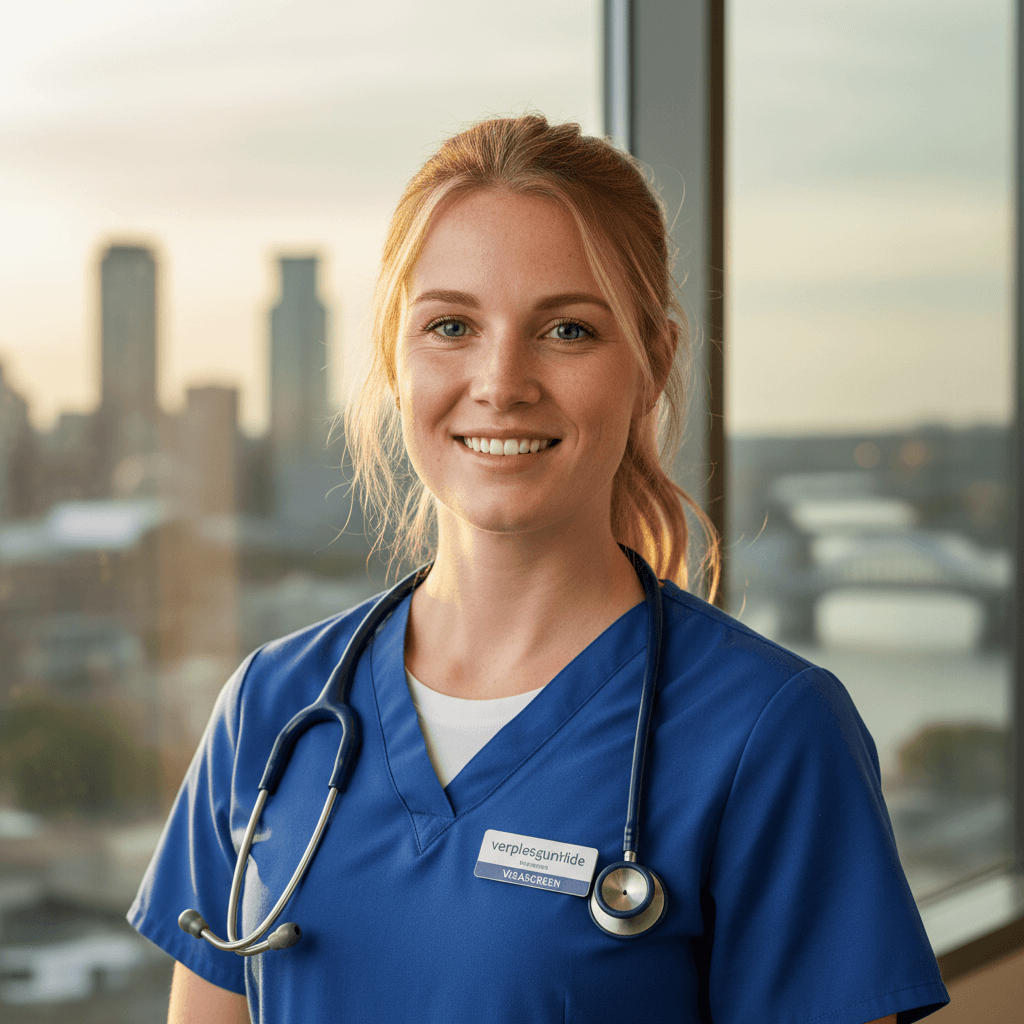
Elif(36)
Amsterdam → Minneapolis, Minnesota
For ten years I worked as an ICU nurse at the AMC in Amsterdam. The workload was high, the salary mediocre and growth opportunities limited. When a recruiter from an American hospital approached me, I was skeptical. But after research I discovered that the US has a chronic nursing shortage and actively recruits internationally. My employer, a large hospital system in Minneapolis, sponsored my EB-3 visa for skilled workers.
The process was long and complex. First I had to have my Dutch degree evaluated by CGFNS (Commission on Graduates of Foreign Nursing Schools). Then I needed to obtain the VisaScreen certificate, confirming that my education and English proficiency meet American standards. I took the TOEFL (score: 102) and the NCLEX-RN exam, the American nursing license. The NCLEX is challenging -- 75 to 265 adaptive questions on pharmacology, patient care and ethics. I passed on the first attempt after three months of study.
The PERM application (labor certification) by my employer took eight months. Then followed the I-140 petition at USCIS and waiting for a visa number. As born Turkish (naturalized Dutch), I was lucky: wait times for my birth country were shorter than for India or China. In total it took two years from first contact to arrival in Minneapolis.
Working in an American hospital is fundamentally different from the Netherlands. The patient-nurse ratio is comparable (1:2 in the ICU), but documentation is many times more extensive. Everything must be legally airtight because of litigation risk. My salary is $82,000 per year -- almost double what I earned in Amsterdam. But health insurance through my employer costs $190 per month and the deductible is $2,500. As a nurse in the Dutch healthcare system, I didn't pay that.
Minneapolis surprised me positively. The city is clean, safe and has a thriving arts scene. The winters are brutal -- -30°C is not unusual -- but the summers are beautiful with thousands of lakes. The Somali and Ethiopian communities make the city culturally diverse. As a Dutch-Turkish woman I feel more at home here than you'd expect. The "Minnesota Nice" culture seems superficial, but after a year I've built genuine friendships.
After three years I've become a charge nurse -- a leadership position that would take much longer in the Netherlands. Growth opportunities in American healthcare are enormous. My advice to Dutch nurses: America offers better salaries, faster career advancement and enormous demand for your skills. But prepare for the NCLEX, the VisaScreen process and cultural differences in patient care. And learn to deal with the fact that your patients sometimes can't afford care.
Highlights
- EB-3 visa for nurses: CGFNS evaluation + VisaScreen + NCLEX required
- NCLEX-RN: 75-265 adaptive questions, three months study time
- ICU nurse salary: $82,000/year vs. ~€42,000 in the Netherlands
- PERM + I-140 process takes about two years from start to green card
Other stories

Wouter
Amsterdam → San Francisco, Californie
Through an H-1B visa I landed at a tech giant in San Francisco. The salary is high, but the bureaucracy and healthcare costs are a world apart.

Martijn
Rotterdam → New York City, New York
As finance director I was transferred to headquarters in Manhattan. The L-1 visa was fast, but FATCA and double taxation made things financially complex.

Femke
Utrecht → Austin, Texas
With an E-2 investor visa I started a sustainable fashion brand in Austin. Texas has no income tax, but American business culture required adjustment.