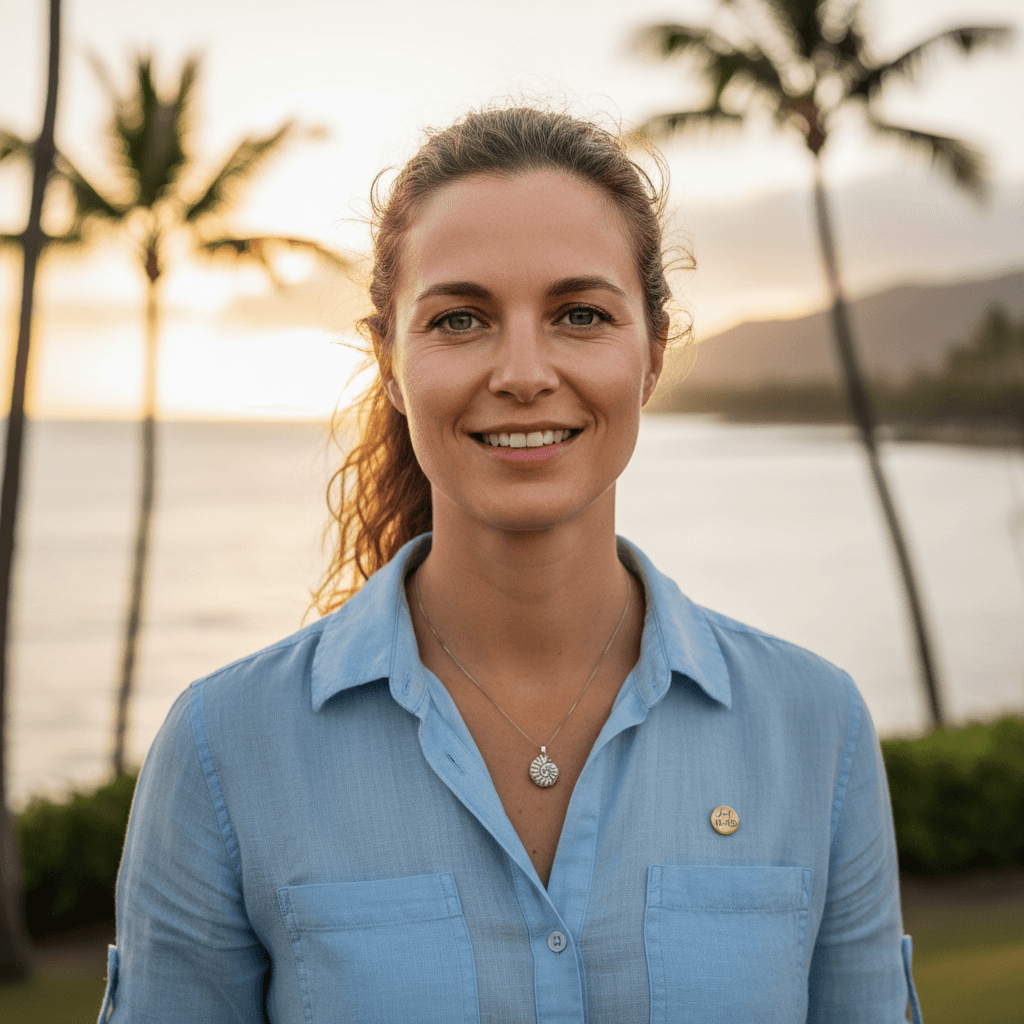
Fleur(37)
Amsterdam → Maui, Hawaii
As a marine biologist I worked six years at NIOZ (Royal Netherlands Institute for Sea Research) on Texel. When the Hawaii Institute of Marine Biology offered a postdoc position in coral reef ecology, I didn't hesitate. Hawaii is the epicenter of marine research in the Pacific. My J-1 Exchange Visitor visa was arranged through the university -- the DS-2019 form was ready within two weeks and the consular interview in Amsterdam went smoothly.
Life on Maui is paradise but expensive. Hawaii has the highest cost of living of all US states. My studio apartment in Kihei costs $2,300 per month -- for 35 square meters. Groceries are 30-40% more expensive than on the mainland: a liter of milk costs $7, a kilo of chicken breast $14. Everything must be shipped or flown in. My university salary of $58,000 is just enough to get by. Many locals work two or three jobs to pay rent.
The J-1 two-year home residency requirement was an obstacle. After my postdoc I wanted to stay, but regulations require you to live in your home country for two years before applying for another visa. My university helped me obtain a waiver through the "no objection" statement from the Dutch consulate. With that waiver I could transition directly to an H-1B when I received an assistant professor position.
The weather on Maui is spectacular: 25-30 degrees year-round, constant trade winds and a few brief rain showers per day on the windward side. But the isolation is real. The nearest mainland is a five-hour flight. If you miss family in the Netherlands, the distance is emotionally heavy. The Amsterdam-Maui flight takes 22 hours with two layovers. I go back twice a year -- flight tickets cost $1,200-$1,800 each time.
Local culture is unique. Hawaii has a strong indigenous identity and as a haole (foreigner) you must respectfully engage with Hawaiian traditions. The aloha spirit is real -- people are warm and hospitable. But there's also tension over gentrification and the fact that outsiders drive up housing prices. I try to contribute to the community through my coral reef restoration project with local schools.
After four years on Maui my H-1B has been renewed and I'm working toward a green card through the EB-1B category for outstanding researchers. My publications on coral bleaching and my NIH grant support the application. My advice: Hawaii is not for everyone. Costs are extreme, isolation is real and career opportunities outside tourism and research are limited. But as a marine scientist there's no better place on earth. Every morning I dive into crystal-clear water to study the most diverse ecosystem in the world.
Highlights
- J-1 to H-1B: waiver of two-year requirement via Dutch consulate
- Hawaii: highest cost of living in the US, milk $7/liter
- Isolation: nearest mainland 5 hours flying, Netherlands 22 hours
- Green card via EB-1B for outstanding researchers with publications and grants
Other stories

Wouter
Amsterdam → San Francisco, Californie
Through an H-1B visa I landed at a tech giant in San Francisco. The salary is high, but the bureaucracy and healthcare costs are a world apart.

Martijn
Rotterdam → New York City, New York
As finance director I was transferred to headquarters in Manhattan. The L-1 visa was fast, but FATCA and double taxation made things financially complex.

Femke
Utrecht → Austin, Texas
With an E-2 investor visa I started a sustainable fashion brand in Austin. Texas has no income tax, but American business culture required adjustment.